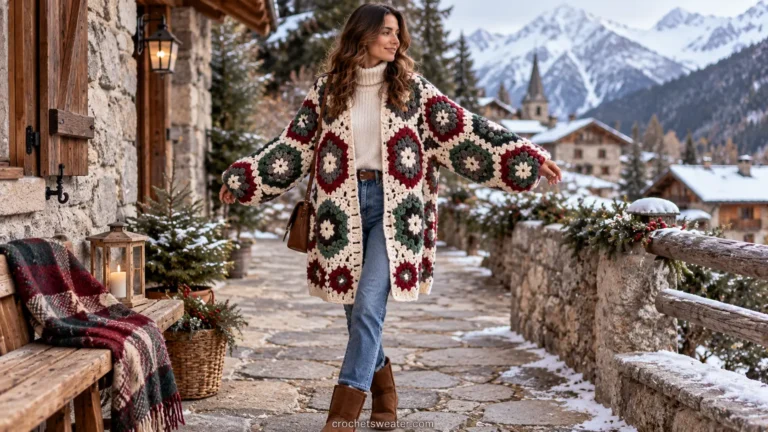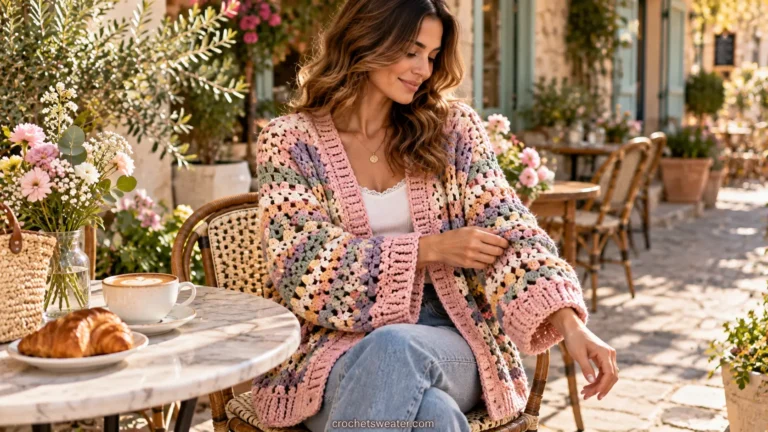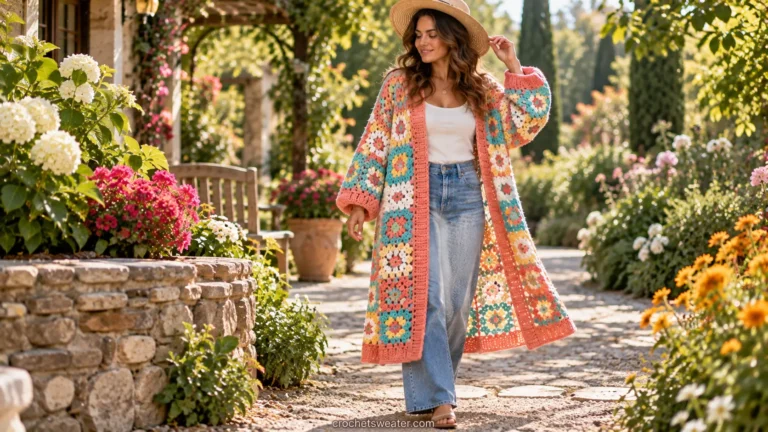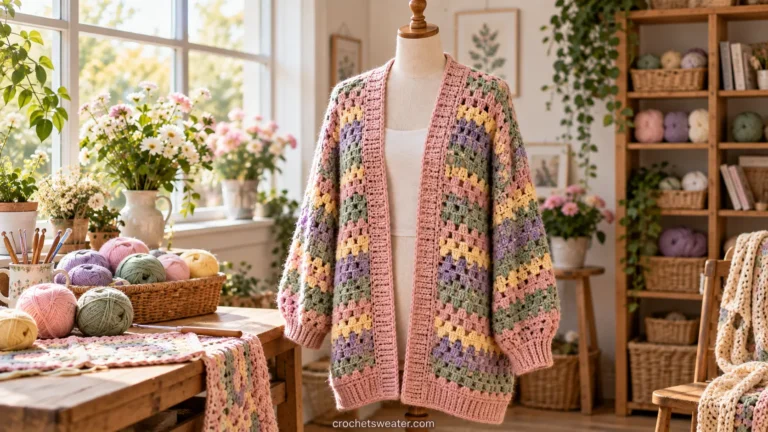
An easy hexagon cardigan pattern proves that geometric motif garments don’t have to be reserved for advanced crocheters. By choosing the right motif size, join as you go technique, and a manageable color palette, this eyecatching style becomes genuinely approachable. This guide covers what makes a hexagon pattern beginner friendly, from motif construction to final assembly, so your first attempt turns out polished rather than overwhelming.
Table of Contents
- What Makes Hexagon Patterns Approachable
- Choosing a Manageable Motif Size
- Simplest Joining Method
- Yarn That Keeps Things Simple
- Fit Without Complex Shaping
- Common Beginner Mistakes
- Tips for a Polished Finish
- Helpful Resource
- Related Resources
- FAQ
What Makes Hexagon Patterns Approachable
Unlike a seamless top down cardigan, an easy hexagon cardigan pattern relies on repetition rather than shaping. Once you’ve learned to work one motif, every subsequent hexagon uses the same steps, which makes the technique itself fairly quick to master.
The real skill involved is joining, not the motifs themselves, so choosing a simple joining method early on keeps the whole project manageable from start to finish.
Why Beginners Do Well With Hexagons
- Motifs are small, portable, and quick to complete
- One repeated technique, no complex shaping
- Mistakes are contained to a single motif, not the whole garment
- Easy to pause and resume between motifs
Choosing a Manageable Motif Size
Motif size has a direct effect on how easy the whole project feels. Smaller hexagons mean more pieces and more joining, while very large motifs can be harder to keep symmetrical while learning the shape.
For an easy hexagon cardigan pattern, a mid-size motif roughly 4 to 5 inches across in worsted weight yarn offers a good balance between speed and manageable joining.
Simplest Joining Method
Joining is usually the trickiest part of any hexagon project, but a few methods make it considerably easier for beginners.
Join-as-you-go connects each new motif to its neighbors during the final round, avoiding a separate seaming stage entirely. This is generally the easiest method for a first hexagon project.
Whip-stitch seaming, done after all motifs are complete, gives a flatter finish but requires laying out and tracking dozens of pieces before joining begins.
| Method | Ease Level | Notes |
|---|---|---|
| Join-as-you-go | Easiest | No separate seaming stage |
| Whip-stitch after | Moderate | Flatter, more invisible finish |
| Slip-stitch seams | Moderate | Quick but visible ridge |
Yarn That Keeps Things Simple
A smooth, solid color worsted weight yarn is the most forgiving choice for an easy hexagon cardigan pattern. Solid shades make it simple to see stitch placement, especially around motif corners where accuracy matters most.
Limiting yourself to two or three coordinating colors also keeps the project simpler, both for tracking color changes and for planning the overall layout.
Tip: A cotton acrylic or wool acrylic blend blocks into crisp hexagon edges and holds its shape well once joined.
Fit Without Complex Shaping
One advantage of an easy hexagon cardigan pattern is that fit comes from motif count rather than increases and decreases, which removes a common source of beginner frustration.
- Lay out motifs against your body before final joining to check overall width.
- Add or remove a row of motifs at the hem to adjust length.
- Keep a simple rectangular layout for a first project rather than attempting shaped armholes.
Common Beginner Mistakes
A handful of issues show up often with a first easy hexagon cardigan pattern, and most are simple to avoid.
- Not blocking motifs before joining, which can leave edges uneven.
- Switching yarn weights mid-project, causing motifs to vary in size.
- Skipping a layout step, leading to color placement that looks accidental rather than planned.
Tips for a Polished Finish
A few finishing details make a simple motif garment look considerably more intentional.
- Block each motif before joining so edges line up cleanly.
- Add a single crochet border around the entire cardigan for a tidy outer edge.
- Weave in ends as you go rather than saving all of them for the end.
Helpful Resource Section
Before choosing yarn for any easy hexagon cardigan pattern, the Yarn Weight Conversion Chart is a useful reference because it helps compare yarn categories and avoid sizing issues before starting a garment project.
Related Crochet Sweater Resources
New garment makers may also enjoy our Easy Crochet Sweater Patterns for Beginners, which features approachable projects designed to build confidence.
For lightweight layering inspiration, see our Crochet Cardigan Pattern Ideas, where you’ll find wearable projects suitable for multiple seasons.
Frequently Asked Questions
Q: Is an easy hexagon cardigan pattern really beginner friendly?
A: Yes the technique itself repeats motif after motif, and join as you go construction avoids the trickiest part of the process.
Q: How many hexagons does a beginner cardigan usually need?
A: This depends on motif size, but many adult cardigans use 60–100 hexagons arranged in a simple rectangular layout.
Q: What yarn works best for a first hexagon cardigan?
A: A solid color, worsted weight cotton acrylic or wool-acrylic blend is easiest to work with and blocks into clean edges.
Conclusion
An easy hexagon cardigan pattern comes down to choosing a manageable motif size, a join as you go technique, and a simple color palette. Blocking each motif and keeping the layout rectangular will help your first attempt come together smoothly. Save this guide so you can reference the tips as you work through your own hexagon cardigan.