A crochet cardigan pattern is the written blueprint that turns balls of yarn into a wearable, finished sweater covering everything from gauge and sizing to construction method and finishing details. If you’ve ever opened a pattern PDF and felt lost in the abbreviations and charts, you’re not alone. This guide walks through what’s actually inside a crochet cardigan pattern, how its parts fit together, and what to check before you commit yarn and hours to a project.
Table of Contents
- The Core Parts of Every Pattern
- Gauge and Why It Matters More Than You Think
- Construction Methods Explained
- Sizing and Ease
- Reading Stitch Instructions and Charts
- Finishing Details Patterns Often Underexplain
- FAQ
The Core Parts of Every Pattern
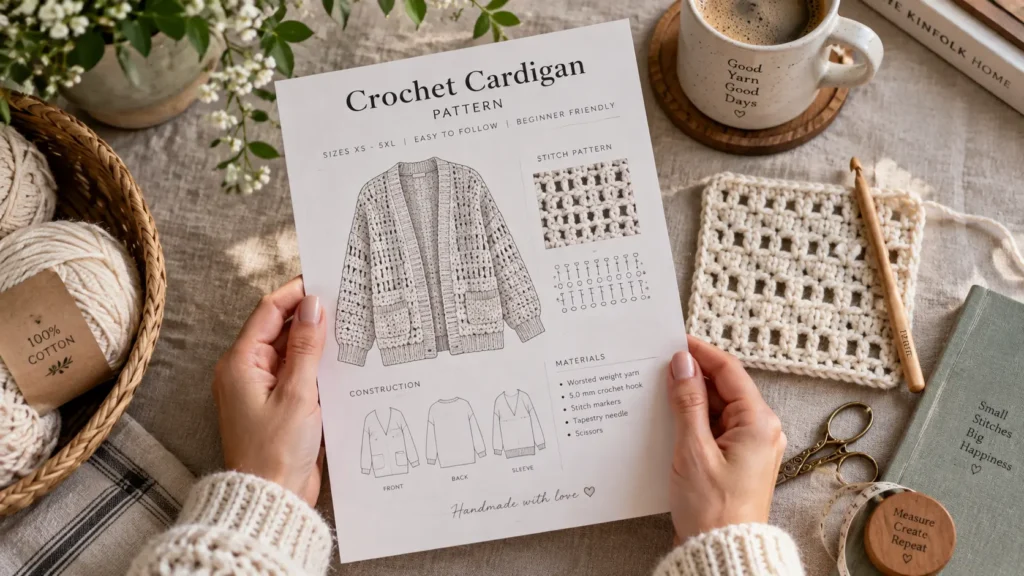
Every well-written crochet cardigan pattern includes a materials list (yarn weight, yardage, hook size), a gauge swatch instruction, sizing information, and a stitch key defining any abbreviations used. Beyond that, it breaks the garment into sections typically back, fronts, sleeves, and any collar or button band each with its own row-by-row or round by round instructions.
Many patterns also include a schematic: a simple line drawing with finished measurements at the chest, length, and sleeve. This is often more useful than the written size chart alone, since it shows you exactly how the garment is shaped.
Gauge and Why It Matters More Than You Think
Gauge tells you how many stitches and rows fit into a 4-inch square using the pattern’s specified hook and yarn. Skipping the gauge swatch is the single most common reason a finished crochet cardigan pattern ends up too big, too small, or drapes differently than the photos.
Because crochet fabric is denser and less elastic than knitting, even a small gauge mismatch compounds significantly over a full cardigan body. If you’re considering a yarn substitution, the Yarn Weight Conversion Chart can help you compare yarn categories and gauge expectations before starting, which reduces the risk of sizing surprises later.
Construction Methods Explained
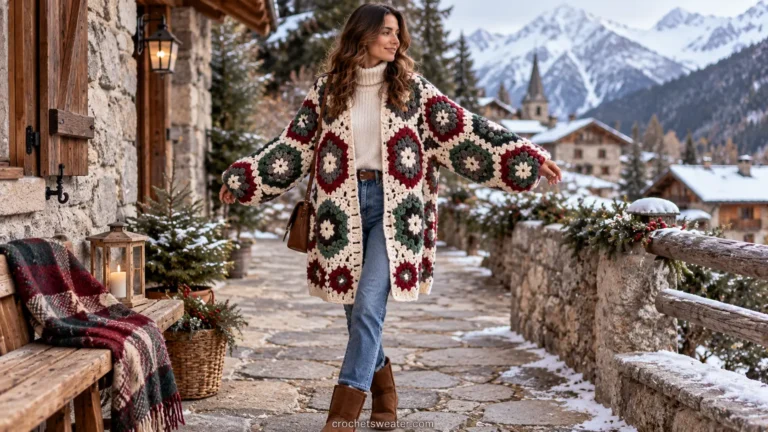
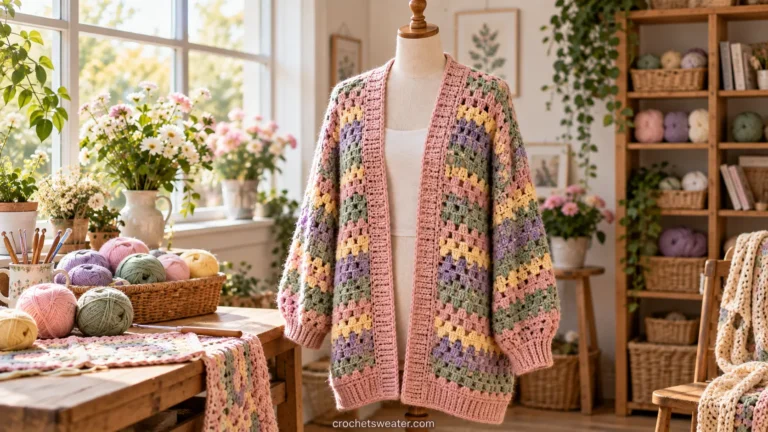
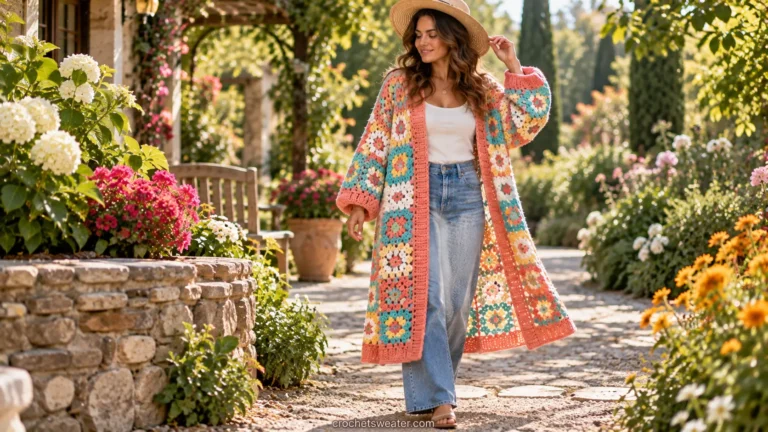
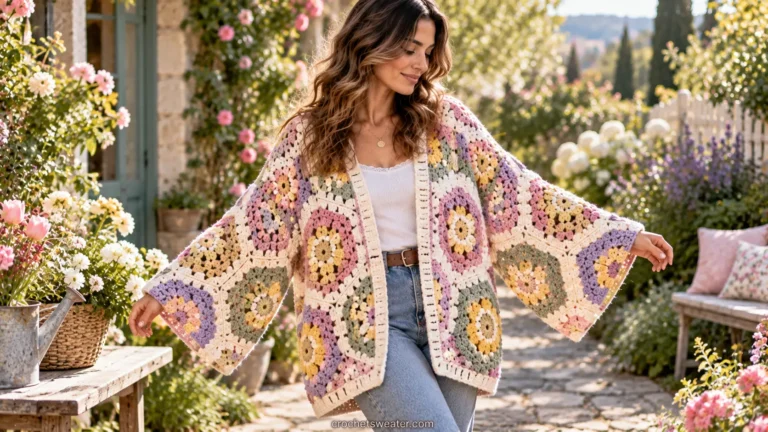
Crochet cardigan patterns generally use one of three construction approaches: worked-flat-and-seamed (pieces made separately, then sewn together), seamless top-down (worked in one piece starting at the neckline), or granny-square/motif-based (individual squares joined into panels). Each method changes how forgiving the pattern is to modify.
Top-down seamless patterns are popular with beginners because you can try the cardigan on as you go and adjust length on the fly. Seamed construction, by contrast, gives cleaner structure and is often preferred for tailored, fitted silhouettes. If you’re new to comparing these approaches, our Top-Down vs Seamed Crochet Cardigans guide walks through the trade-offs of each in more depth.
Sizing and Ease
Pattern sizing is usually given as a range of finished chest measurements, not your body measurement the difference between the two is called “ease.” A pattern offering 4 inches of positive ease will fit looser than your actual chest size, which is intentional for an open cardigan silhouette.
Always compare the pattern’s finished measurements schematic to a cardigan you already own and love the fit of, rather than relying on the labeled size alone, since sizing conventions vary widely between designers.
Reading Stitch Instructions and Charts
Written instructions in US terms use abbreviations like sc (single crochet), hdc (half double crochet), dc (double crochet), and ch (chain), with repeats marked by asterisks or brackets showing how many times to repeat a stitch sequence within a row. Stitch charts, when included, use symbols to show the same information visually and are especially useful for anyone who crochets by pattern-reading rather than sight.
For anyone newer to garment-specific instructions, it helps to practice a small swatch of the pattern’s main stitch repeat before starting the full piece, so the rhythm feels familiar once you’re shaping sleeves or a neckline. Our Common Crochet Abbreviations for Beginners article breaks down the most frequently used shorthand so you’re not constantly stopping to look things up.
Finishing Details Patterns Often Underexplain
The instructions for buttonhole placement, edging, and blocking are frequently the shortest part of a pattern, yet they have an outsized effect on how professional the final cardigan looks. Blocking wetting or steaming the finished pieces to set their shape is especially important for crochet, since it relaxes curling edges and evens out stitch definition.
A pattern should specify approximate button spacing and edging stitch counts, but always double-check buttonhole placement against your own body before finishing, since gauge differences shift where buttons naturally fall.
FAQ
Do I need to follow a crochet cardigan pattern exactly, or can I modify it?
You can modify elements like length, sleeve style, or edging, but changes to stitch count or gauge should be recalculated carefully, since crochet garments are less forgiving of unplanned adjustments than knitting.
What skill level is needed to read a crochet cardigan pattern?
Most patterns are labeled beginner, intermediate, or advanced based on shaping complexity and stitch variety; comfort with basic stitches and reading repeats is usually enough to start with a beginner-labeled pattern.
Why does my finished cardigan not match the pattern photo?
Differences usually come from yarn substitution, skipped gauge swatching, or blocking being skipped all of which affect drape and finished size more than most crocheters expect.
Conclusion
A crochet cardigan pattern is really a system of interlocking decisions gauge, construction, sizing, and finishing that together determine your finished garment. Understanding each part makes it far easier to choose a pattern that will actually fit and flatter you. Save this guide for reference next time you’re pattern shopping, and share it with a fellow crocheter just getting started.