Finding genuinely good free crochet sweater patterns usually means wading through outdated blogs and broken links before you land on something worth your yarn budget. This roundup skips that search and focuses on pattern styles that are actually well-drafted, wearable, and worth the hours you’ll put into them. You’ll get a mix of construction types and skill levels, so whether this is your first sweater or your fifteenth, there’s a project here that fits.
Table of Contents
- Classic Granny Square Pullover
- Top-Down Raglan Crew Neck
- Chunky Oversized Cardigan
- Cropped Puff Sleeve Sweater
- V-Neck Textured Pullover
- Lightweight Summer Tank Sweater
- Colorblock Striped Sweater
- Waffle Stitch Crew Neck
- Boxy Drop-Shoulder Sweater
- Ribbed Fitted Sweater
- Textured Cable Panel Pullover
- FAQ
1. Classic Granny Square Pullover
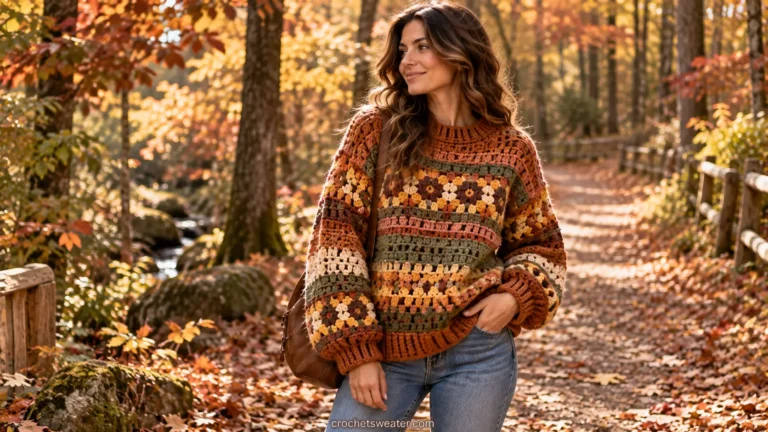
Granny square sweaters are built from individually crocheted squares joined into panels, which makes them one of the most forgiving free crochet sweater patterns for using up scrap yarn. Each square is a small, portable project, so the sweater comes together in sessions rather than one long commitment.
The trade-off is finishing time: joining dozens of squares and weaving in ends takes longer than a seamless construction. Look for patterns with a clear join-as-you-go method if you want to skip a separate seaming step.
2. Top-Down Raglan Crew Neck
This construction starts at the neckline and works downward, splitting for sleeves and body as you go, which means you can try the sweater on throughout and adjust length before binding off. It’s a common recommendation for a first sweater because there’s little to no seaming involved.
Raglan shaping relies on consistent increases at four points around the yoke, so gauge consistency matters more here than in a seamed design.
3. Chunky Oversized Cardigan
Worked in bulky or super bulky yarn, oversized cardigans use simple stitch patterns like half double crochet or double crochet in the round or in large flat panels, making them genuinely fast projects despite the yarn commitment. The loose fit also forgives minor gauge inconsistencies that would show up in a fitted design.
Because the yarn itself is the star here, pattern choice often comes down to yardage requirements and how the designer handles front closures, whether that’s an open drape or added buttons.
4. Cropped Puff Sleeve Sweater
Cropped sweaters with dramatic sleeves combine a fitted body with voluminous puff or bell sleeves, usually achieved through short-row shaping or gathered increases at the sleeve cap. This contrast between fitted and full is what gives the style its current popularity in editorial styling.
Because the body is shorter, yardage requirements run lower than a full-length sweater, making it a reasonable pattern to try with a single sweater-quantity skein set.
5. V-Neck Textured Pullover
A textured stitch, like a shell stitch, bobble stitch, or linked double crochet, adds visual interest without requiring colorwork skills. V-neck shaping is typically built into the yoke through paired decreases, which is a good introduction to shaping beyond simple increases.
Textured stitches also use more yarn per square inch than plain single or double crochet, so check the pattern’s yardage rather than assuming it matches a similarly sized plain sweater.
6. Lightweight Summer Tank Sweater
Worked in cotton or cotton-blend yarn with an open, lacy stitch pattern, sleeveless sweater tanks are one of the few free crochet sweater patterns genuinely suited to warm-weather wear. Mesh and filet-style stitch patterns keep the fabric breathable.
Cotton has less stretch and recovery than wool blends, so sizing tends to run more literally true to the finished measurements listed.
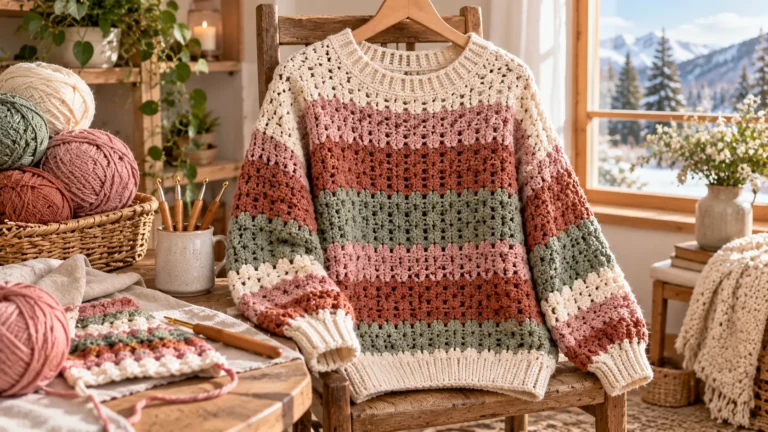
7. Colorblock Striped Sweater
Stripe and colorblock sweaters use straightforward stitch patterns but require carrying or cutting yarn at color changes, which is a different skill than following a single-color pattern. Patterns that space color changes at natural construction points, like sleeve joins or yoke divisions, tend to have cleaner results than random stripe placement.
Weaving in the extra ends from color changes adds meaningful finishing time, so factor that into your project timeline.
8. Waffle Stitch Crew Neck
The waffle stitch creates a grid-like textured fabric using a combination of front and back post stitches, giving a dense, structured look that resembles knitwear more than typical crochet. It’s a heavier fabric than single or double crochet alone, which makes it well-suited to cooler climates.
Post stitch patterns are also more physically demanding on your hands over long sessions, so pace longer patterns with breaks.
9. Boxy Drop-Shoulder Sweater
Drop-shoulder construction extends the body width straight out to form the sleeve opening, skipping separate sleeve cap shaping entirely. This makes it one of the more beginner-friendly free crochet sweater patterns for straightforward rectangle-based construction.
The trade-off is fit: drop-shoulder sweaters have a relaxed, boxy silhouette by design, so this isn’t the pattern style to reach for if you want a fitted result.
10. Ribbed Fitted Sweater
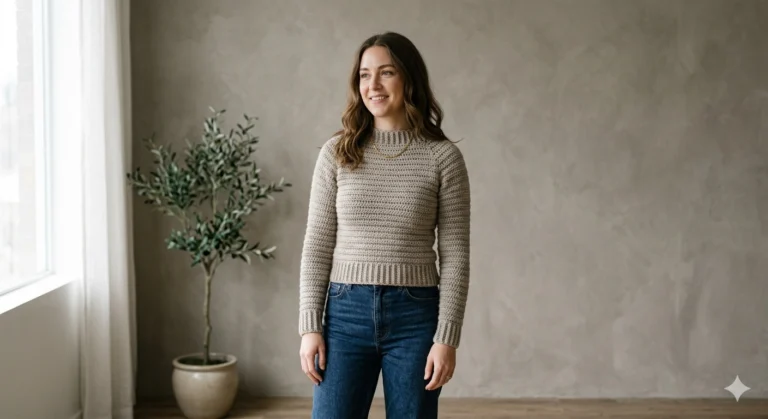
Ribbing, usually created with front or back loop single crochet worked in rows, or post stitches, gives crochet fabric stretch and recovery that plain stitches don’t have. This makes fitted sweater silhouettes more achievable in crochet than they’d otherwise be.
Ribbed fabric uses noticeably more yarn than an equivalent area of plain stitching, so double-check the yardage listed against your intended size.
11. Textured Cable Panel Pullover
Crochet cables are worked using front post treble or double crochet stitches crossed over each other, and they read as a more advanced technique than they actually are once you understand the basic crossing method. A single cable panel down the center front or sleeves adds visual interest without requiring cables across the whole garment.
Cable panels also make excellent standalone practice pieces before committing to a full sweater with repeated cable repeats throughout.
Always follow the full, official source for any pattern you choose, since exact stitch counts, yardage, and sizing vary by designer and size range.
FAQ
Are free crochet sweater patterns as good as paid ones?
Quality varies more by individual designer than by price. Many free patterns from established designers are tech-edited and just as reliable as paid ones.
What skill level should a beginner start with?
Drop-shoulder or top-down raglan constructions in a plain stitch are the most forgiving starting points, since they involve minimal shaping and no seaming.
How much yarn do I need for a crochet sweater?
Yardage depends heavily on size, yarn weight, and stitch pattern, typically ranging from 800 to 2,000+ yards. Always check the specific pattern’s yardage chart for your size.
Conclusion
With eleven different construction styles and skill levels covered, you’ve got a solid starting list of free crochet sweater patterns to work through this year. Save this roundup for your next yarn-buying trip, and pass it along to anyone in your crochet circle looking for their next project. Pick one, swatch first, and get hooking.