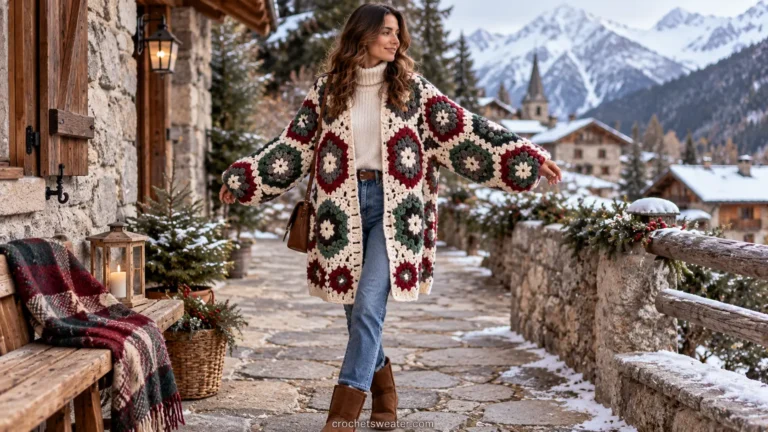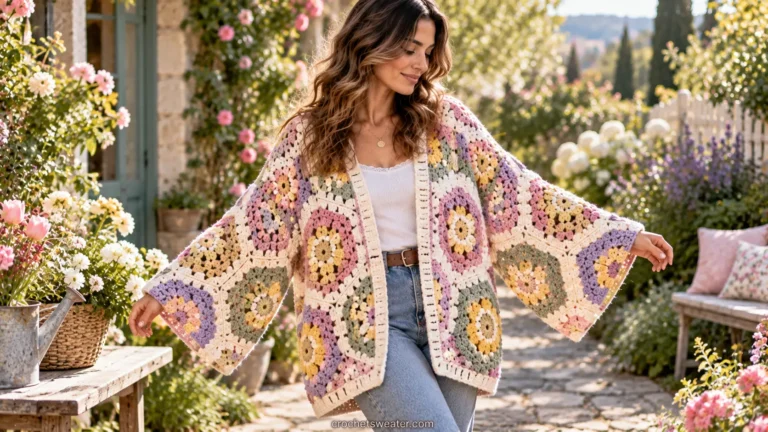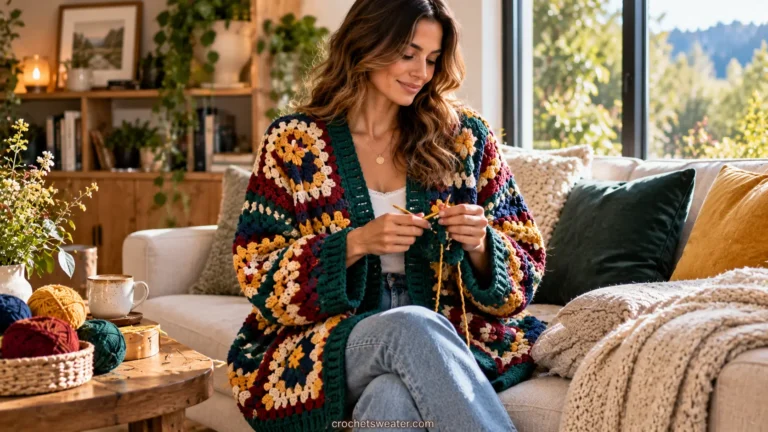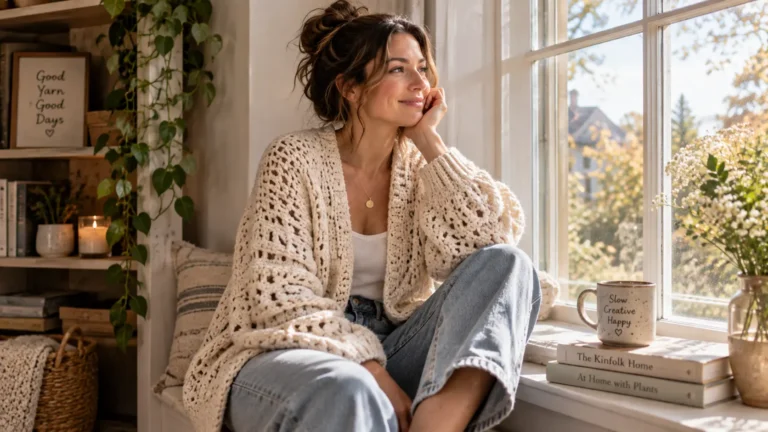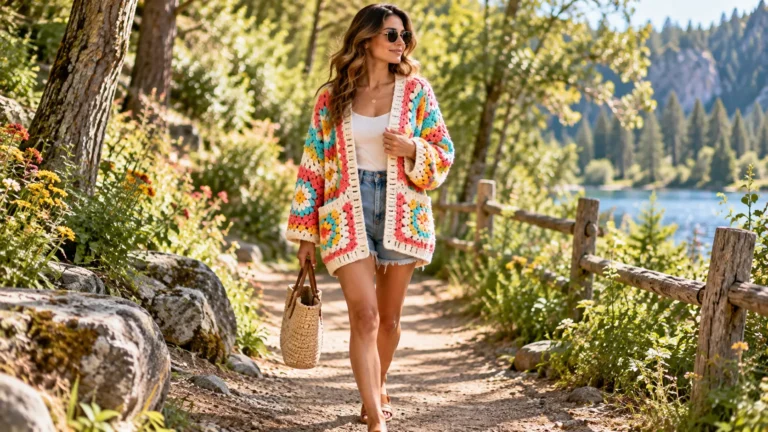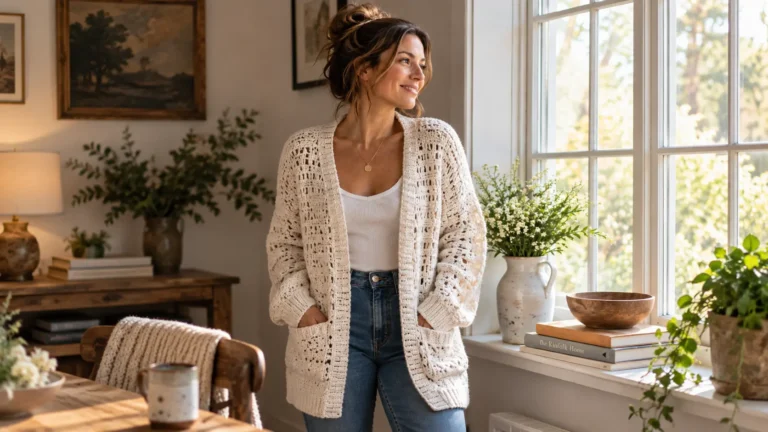
A crochet cardigan sweater is an open-front garment made with crochet stitches instead of knit ones, worn as a layering piece over shirts, dresses, or tanks. Unlike a pullover sweater, it has no closed neckline, which makes it easier to fit and easier to wear across different body types. This guide breaks down what actually defines a crochet cardigan sweater, how it differs from other crochet garments, and what to consider before choosing or making one.
Table of Contents
- Defining the Crochet Cardigan Sweater
- How It Differs From a Pullover
- Common Construction Styles
- Yarn and Stitch Choices
- Fit Considerations
- Wearability and Layering
- Beginner Considerations
- Helpful Resource
- Related Resources
- FAQ
Defining the Crochet Cardigan Sweater
At its core, a crochet cardigan sweater is any crocheted garment that opens down the center front, rather than pulling over the head. The term covers a wide range of styles, from cropped bolero length pieces to long duster cardigans that fall past the knee.
What ties them together is the open front structure. Some versions include buttons, ties, or a single closure point, while others are designed to hang open with no fastening at all.
Core Features
- Open front, full length or partial
- Sleeves that may be set-in, raglan, or dropped-shoulder
- Optional closures: buttons, ties, hook and eye
- Bodies ranging from cropped to hip-length to duster-length
How It Differs From a Pullover
A crochet pullover sweater is closed, meaning the front and back are joined at the sides with only a neck opening. A crochet cardigan sweater stays open down the front, which changes both the construction and the fit.
Because a cardigan doesn’t need to stretch over the head, the neckline can be shaped more freely deep V necks, wide collars, or even collarless designs are all common. This also makes a crochet cardigan sweater more forgiving for makers who are still learning to gauge finished sizing accurately.
Common Construction Styles
There isn’t one single way to build a crochet cardigan sweater, and the method chosen affects both the final drape and the difficulty level.
Top down construction starts at the neck and works down, letting the maker try on the piece as it grows. This is a common approach for a beginner-friendly crochet cardigan sweater.
Bottom-up panel construction builds the back, fronts, and sleeves as separate pieces that are seamed together, giving a more tailored result.
Circular yoke construction shapes the shoulders with increases worked in rounds before splitting off for the body and sleeves, a technique often used in raglan style designs.
| Construction | Result | Difficulty |
|---|---|---|
| Top-down | Relaxed, easy-fit drape | Beginner |
| Bottom-up panels | Structured, tailored shape | Intermediate |
| Circular yoke | Smooth raglan shoulders | Intermediate |
Yarn and Stitch Choices
The stitch and yarn used in a crochet cardigan sweater change how it hangs and wears. A tightly worked single crochet fabric is dense and warm but can feel stiff over larger garments.
Looser stitches like a linen stitch, moss stitch, or a simple V-stitch produce a softer drape that behaves more like woven fabric than a stiff crochet swatch.
Tip: For a crochet cardigan sweater meant for everyday wear, a DK or worsted weight yarn with some drape, such as a cotton acrylic or wool-alpaca blend, holds its shape better than a fully synthetic yarn.
Fit Considerations
Because a crochet cardigan sweater doesn’t need to fit through the head opening, sizing comes down mostly to shoulder width, sleeve length, and body length.
- Measure shoulder-to-shoulder before selecting a pattern size.
- Compare finished garment measurements against your own, since crochet gauge varies by maker.
- Decide on body length first cropped, hip-length, or duster since it changes how much yarn and time the project needs.
Wearability and Layering
A crochet cardigan sweater earns its place in a wardrobe by working across seasons, not just one.
- Spring/Fall: A lightweight, open-stitch cardigan over a tank or fitted tee.
- Winter: A heavier yarn and longer body worn over a turtleneck for extra warmth.
- Summer evenings: A lacy, fine-yarn cardigan added for light coverage without overheating.
Beginner Considerations
New makers often assume a crochet cardigan sweater is harder than a pullover, but the opposite is usually true.
- No need to calculate a stretchy neckline opening.
- Top-down construction allows fit checks throughout the project.
- Simple, repeated stitches keep the project manageable while still looking polished.
Helpful Resource Section
Before choosing a yarn substitute for any crochet cardigan sweater pattern, the Yarn Weight Conversion Chart is a useful reference because it helps compare yarn categories and avoid sizing issues before starting a garment project.
Related CrochetSweater Resources
New garment makers may also enjoy our Easy Crochet Sweater Patterns for Beginners, which features approachable projects designed to build confidence.
For lightweight layering inspiration, see our Crochet Cardigan Pattern Ideas, where you’ll find wearable projects suitable for multiple seasons.
Frequently Asked Questions
Q: What makes something a crochet cardigan sweater instead of a shrug?
A: A shrug is typically shorter and covers only the shoulders and arms, while a crochet cardigan sweater has a fuller body that extends past the waist or hip.
Q: Is a crochet cardigan sweater harder to make than a pullover?
A: No since it opens down the front, a crochet cardigan sweater avoids the tricky neckline shaping a pullover requires.
Q: How much yarn does a crochet cardigan sweater need?
A: Most adult sizes need 1,200–2,000 yards, depending on the body length and yarn weight chosen.
Conclusion
A crochet cardigan sweater is defined less by a single pattern and more by its open-front structure, which makes it flexible, forgiving, and easy to layer. Whether cropped or duster-length, the right construction and yarn choice will keep it wearable across seasons. Save this guide so you can reference the construction and fit notes when you’re ready to start your next crochet cardigan sweater.