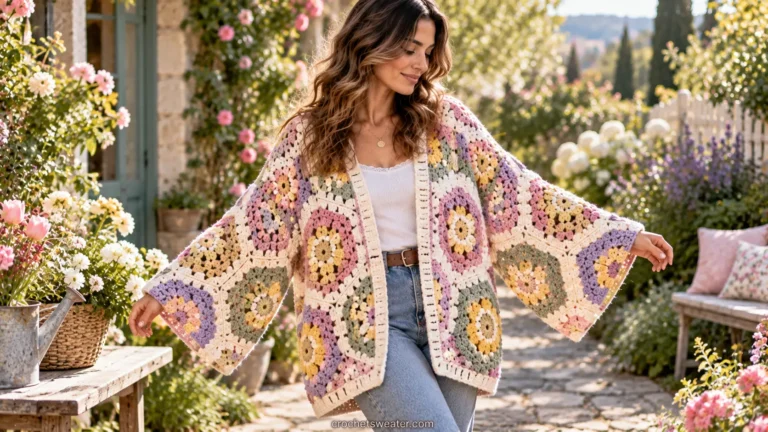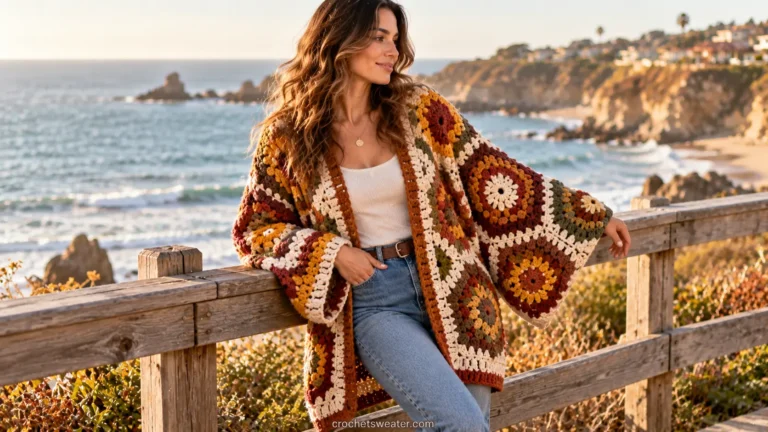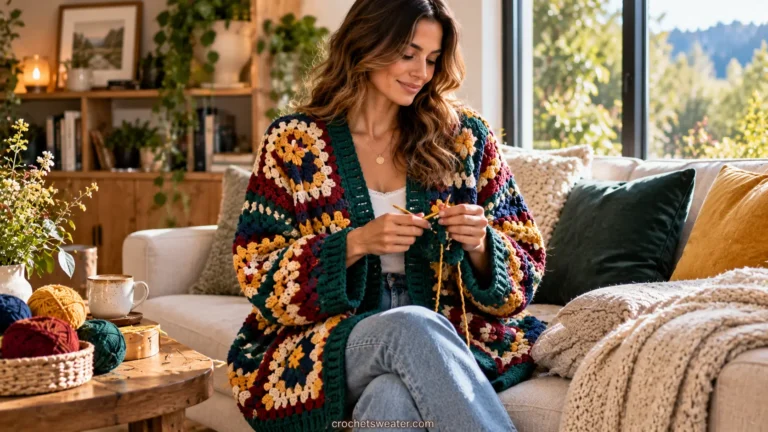
A hexagon cardigan crochet pattern brings a bit of geometric interest to an otherwise classic garment shape, using six sided motifs instead of standard panels or granny squares. The result can range from a bold statement piece to a subtle textural design, depending on motif size and color choice. This guide covers how hexagon construction actually works, which yarns suit it best, and how to avoid the fit issues that motif based garments are prone to.
Table of Contents
- How Hexagon Construction Works
- Motif Size and Its Effect on Fit
- Yarn and Color Choices
- Assembling the Motifs
- Fit Considerations
- Styling a Hexagon Cardigan
- Beginner Considerations
- Helpful Resource
- Related Resources
- FAQ
How Hexagon Construction Works
Unlike top down or panel-based cardigans, a hexagon cardigan crochet pattern is built from individual six-sided motifs that are joined together to form the overall garment shape. Each motif is worked separately, then arranged and seamed or joined as you go into the final silhouette.
This construction method gives makers more control over placement, since motifs can be arranged to create color blocking, gradients, or symmetrical patterning across the front and back.
Why Hexagons Work Well for Cardigans
- Motifs can be portable, project bag friendly work
- Easy to adjust size by adding or removing motifs
- Naturally creates interesting visual texture
- Works well with scrap yarn or color transitions
Motif Size and Its Effect on Fit
The size of each hexagon has a bigger impact on the finished garment than most makers expect. Smaller motifs, worked in finer yarn, create a more fitted, drapey fabric, while larger motifs produce a bolder, more casual look with less structure.
For a first hexagon cardigan crochet pattern, mid-size motifs (roughly 4–5 inches across) strike a good balance between manageable joining and reasonable project speed.
Yarn and Color Choices
Because hexagon motifs are worked individually, this construction style is particularly well suited to using multiple yarn colors without the color-change complexity of striped panels.
A worsted weight wool acrylic or cotton acrylic blend holds hexagon shapes well and blocks into clean geometric edges. Avoid highly textured or fuzzy yarns, which can blur the crisp lines that make hexagon motifs visually distinct.
Tip: Limit your palette to three or four coordinating colors too many competing shades can make the finished cardigan feel busy rather than intentional.
Assembling the Motifs
Joining is where a hexagon cardigan crochet pattern often becomes more time-consuming than other construction methods, since dozens of motifs may need to be connected.
- Join-as-you-go methods connect motifs during the final round of each hexagon, reducing separate seaming work later.
- Whip-stitch seaming after all motifs are complete gives a flatter, more invisible finish but takes longer overall.
- Lay out all motifs before joining to plan color placement and catch sizing issues early.
Fit Considerations
Sizing a hexagon cardigan crochet pattern works differently than shaping a seamless garment, since fit comes from motif count and arrangement rather than increases and decreases.
- Count how many motifs are needed across the bust and adjust the total accordingly.
- Add or remove rows of motifs at the hem to change overall length.
- Test the layout against your body before final joining, since hexagon garments are harder to resize after assembly.
Styling a Hexagon Cardigan
A hexagon cardigan crochet pattern tends to work best as a statement piece rather than a background layer, given its distinct geometric texture.
- Pair with solid-color basics to let the motif pattern stand out.
- Wear open, rather than buttoned, to show off the full hexagon layout.
- Choose a neutral or tonal palette for a piece that’s easier to work into everyday outfits.
Beginner Considerations
A hexagon cardigan crochet pattern is manageable for newer makers, though it does involve more finishing work than a simple panel cardigan.
- Start with a smaller test motif to confirm gauge before committing to the full project.
- Choose join-as-you-go construction to minimize separate seaming steps.
- Keep the color palette simple while learning the joining technique.
Helpful Resource Section
Before choosing yarn for any hexagon cardigan crochet pattern, the Yarn Weight Conversion Chart is a useful reference because it helps compare yarn categories and avoid sizing issues before starting a garment project.
Related Crochet Sweater Resources
New garment makers may also enjoy our Easy Crochet Sweater Patterns for Beginners, which features approachable projects designed to build confidence.
For lightweight layering inspiration, see our Crochet Cardigan Pattern Ideas, where you’ll find wearable projects suitable for multiple seasons.
Frequently Asked Questions
Q: Is a hexagon cardigan crochet pattern hard to make?
A: It’s manageable for beginners, though joining dozens of motifs takes more time than a simple panel or top-down cardigan.
Q: How many hexagon motifs does a cardigan usually need?
A: This varies by motif size and garment dimensions, but many adult cardigans use 60–100 hexagons total.
Q: What’s the easiest way to join hexagon motifs?
A: Join-as-you-go, worked during each motif’s final round, reduces separate seaming and speeds up assembly.
Conclusion
A hexagon cardigan crochet pattern offers a distinctive alternative to standard panel or top-down construction, with plenty of room for color and texture experimentation. Choosing a manageable motif size and a join-as-you-go technique keeps the project approachable even for newer makers. Save this guide so you can reference the construction and sizing notes as you plan your own hexagon cardigan.