Introduction
Picking your first crochet sweater pattern can feel overwhelming when you’re staring at a pattern page full of abbreviations, gauge swatches, and construction diagrams. This crochet sweater pattern guide breaks down exactly what to look for, what to skip, and how to set yourself up for a sweater you’ll actually finish and wear. By the end, you’ll know how to read a pattern with confidence and choose one that matches your skill level.
Table of Contents
- Understand the Construction Method First
- Check the Skill Level Honestly
- Read the Gauge Section Before Anything Else
- Choose Yarn Weight That Matches the Pattern
- Learn the Stitch Abbreviations Used
- Swatch Before You Commit to the Full Sweater
- Know When to Modify vs. Follow Exactly
- FAQ
1. Understand the Construction Method First
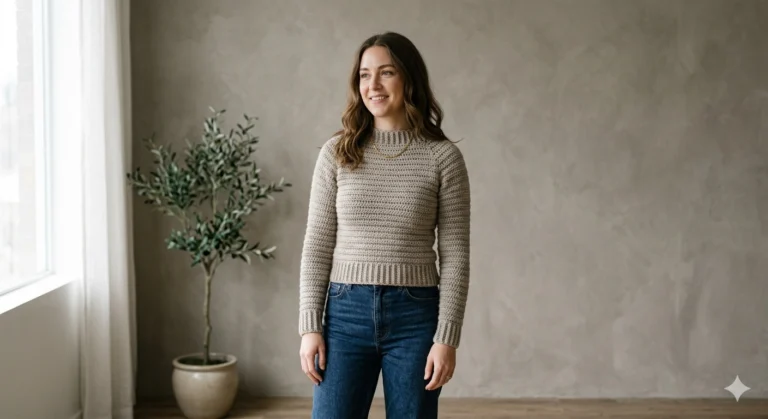
Every crochet sweater pattern uses one of a few core construction approaches: worked flat in pieces and seamed, worked in one piece from the top down, or made from motifs joined together. Top-down patterns let you try the sweater on as you go, which is forgiving for fit. Seamed patterns often produce more structured, tailored shaping but require more finishing work.
Before buying or downloading any crochet sweater pattern, look for a construction diagram or a written summary near the top. This single detail tells you more about the finished garment’s fit and drape than the stitch pattern itself.
2. Check the Skill Level Honestly
Patterns are usually labeled beginner, easy, intermediate, or experienced, but these labels aren’t standardized across designers. A “beginner” label on a crochet sweater pattern often assumes you already know how to increase and decrease consistently, not just make single and double crochet stitches.
Read through the stitch list and pattern notes before starting. If you see cables, colorwork, or complex lace repeats listed as “beginner-friendly,” treat that as a flexible guideline rather than a guarantee.
3. Read the Gauge Section Before Anything Else
Gauge tells you how many stitches and rows fit into a specific measurement, usually a 4-inch square, and it’s the single biggest factor in whether your finished sweater fits. Skipping the gauge section of a crochet sweater pattern is the most common reason beginner sweaters end up too large or too small.
Even experienced crocheters swatch for sweaters specifically, because the stakes of a fit mistake are much higher than with a scarf or hat.
4. Choose Yarn Weight That Matches the Pattern
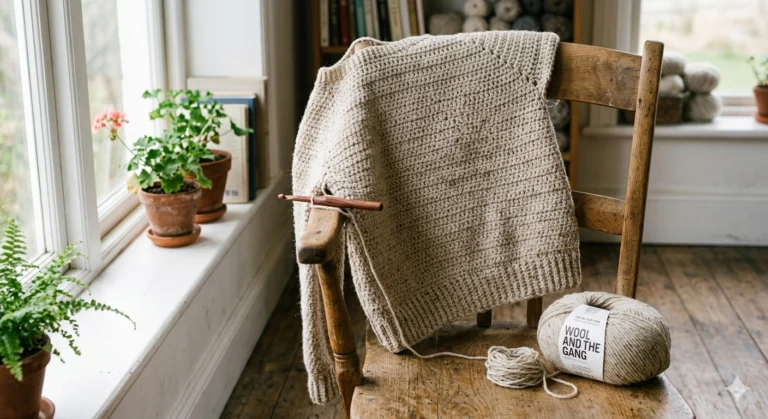
A crochet sweater pattern is written for a specific yarn weight, and substituting without adjusting your hook size or stitch count is the fastest way to end up with the wrong finished measurements. DK and worsted weight yarns are the most common choices for wearable sweaters because they balance drape with reasonable working time.
If you want to substitute yarn, match the yardage and weight category first, then swatch to confirm your gauge still lines up with the pattern’s numbers.
5. Learn the Stitch Abbreviations Used in a Crochet Sweater Pattern
Most sweater patterns rely on a small core of US stitch terms: chain (ch), single crochet (sc), half double crochet (hdc), double crochet (dc), treble crochet (tr), and slip stitch (sl st). A typical crochet sweater pattern lists these in a key near the beginning, along with any special stitches unique to that design.
Confusing UK and US terminology is a common beginner trip-up, since the same abbreviation can mean a different stitch depending on which system the designer used.
6. Swatch Before You Commit to the Full Sweater
A gauge swatch isn’t optional busywork; it’s a small-scale test of your tension, hook choice, and how the yarn behaves once it’s worked up. Make your swatch at least 4×4 inches, block it the way you plan to block the finished sweater, and then measure.
If your stitch count runs tight, size up your hook. If it runs loose, size down. This ten-minute step prevents hours of rework later on any crochet sweater pattern you choose.
7. Know When to Modify vs. Follow a Crochet Sweater Pattern Exactly
Once you understand the construction and gauge, small modifications like adjusting sleeve length or body length become manageable, since you’re just adding or removing rows within the same stitch pattern. Bigger changes, like switching from a raglan to a set-in sleeve, usually require a different pattern entirely rather than an on-the-fly edit.
For your first sweater, following the pattern closely and saving modifications for your second or third project will save you frustration.
Always follow the full, official pattern source for exact stitch counts, row-by-row instructions, and sizing charts. This guide covers the concepts behind reading and choosing a crochet sweater pattern, not a substitute for the pattern itself.
FAQ
What’s the easiest crochet sweater construction for a first project?
Top-down, seamless raglan patterns are generally the most forgiving because you can try the garment on throughout and adjust length before finishing.
Do I really need to swatch for a sweater?
Yes. Gauge differences of even half a stitch per inch can change a finished sweater’s size by several inches across the body.
Can I use any yarn weight for a pattern that calls for worsted?
Not without recalculating gauge and stitch counts. Substituting yarn weight changes drape, sizing, and yardage needs, so always swatch with your substitute yarn first.
Conclusion
Choosing the right crochet sweater pattern comes down to understanding construction, checking gauge, and matching yarn honestly to what the pattern calls for. Save this crochet sweater pattern guide before you start your next project, and share it with a crochet friend who’s ready to size up from scarves. A little prep work now means a sweater you’ll actually wear.