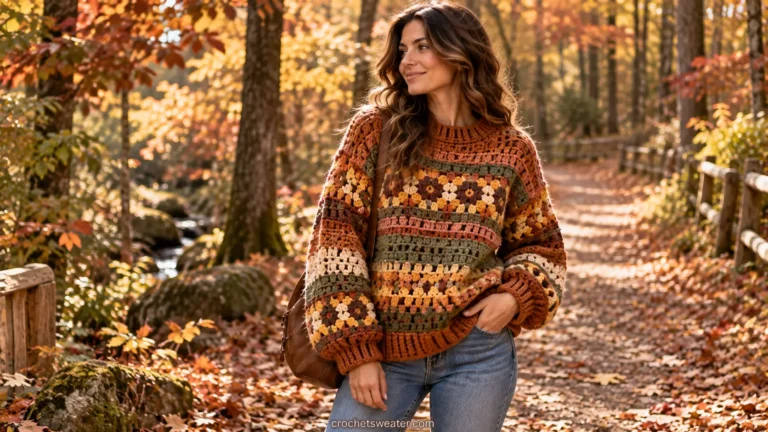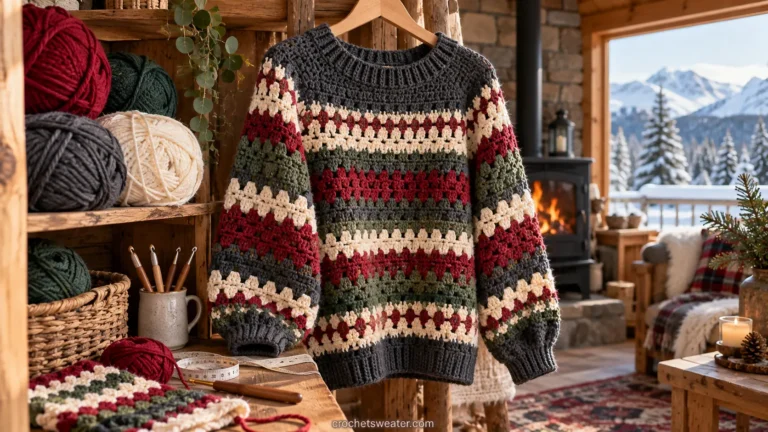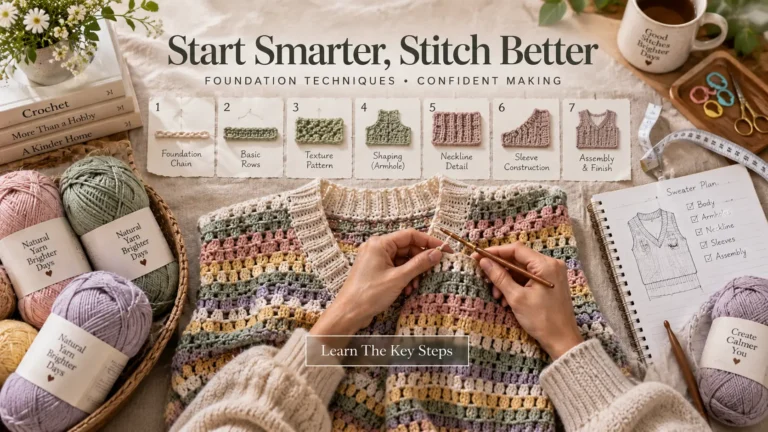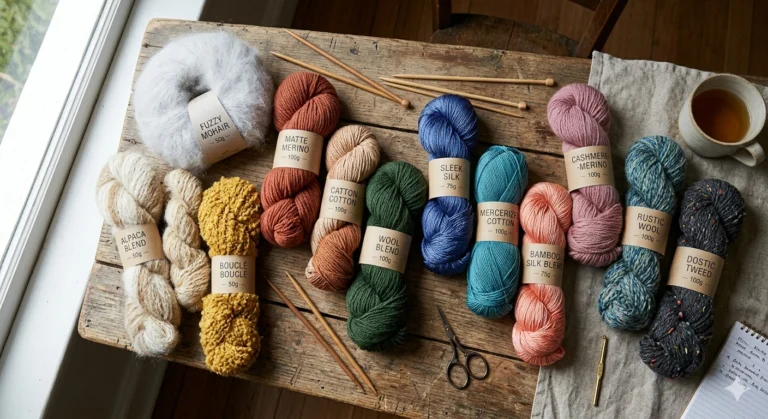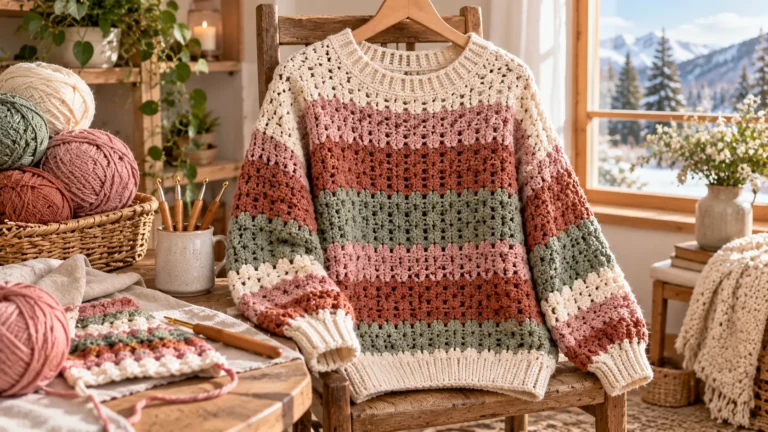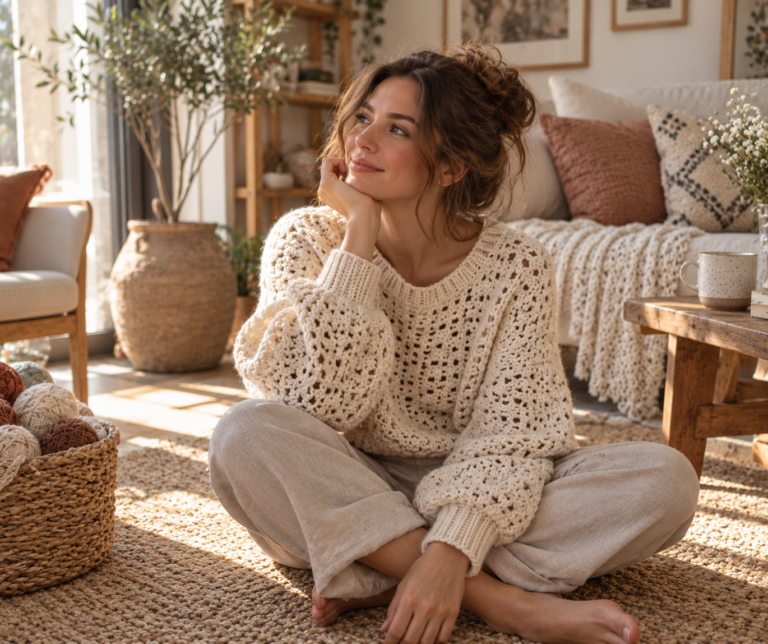
You don’t need an advanced stitch vocabulary to make a sweater that actually looks intentional. Crochet sweater patterns using basic stitches rely on single, half double, and double crochet worked with smart construction choices, proving that fit and finishing matter more than stitch complexity. This guide walks through eight styles built entirely on stitches most beginners already know.
Table of Contents
- Why Basic Stitches Still Make Great Sweaters
- Single Crochet Fitted Pullover
- Half Double Crochet Drop-Shoulder Sweater
- Double Crochet Raglan Crew Neck
- Alternating Rows for Basic Textured Interest
- Front and Back Loop Ribbing on a Simple Base
- Basic Stitch Colorblock Sweater
- Single Crochet Cardigan with Simple Closure
- FAQ
1. Why Basic Stitches Still Make Great Sweaters
Single crochet (sc), half double crochet (hdc), and double crochet (dc) each produce a different fabric density and drape, even without any special technique layered on top. Sc produces the densest, most solid fabric; dc is the loosest and drapiest; hdc sits in the middle, which is why it’s a common default for wearable garments.
Because crochet sweater patterns using basic stitches skip shaping tricks like post stitches or colorwork, the finished look depends heavily on hook size, yarn choice, and finishing details like edging and seaming.
2. Single Crochet Fitted Pullover
Single crochet’s dense, low-stretch fabric holds a fitted silhouette well, since there’s less give than taller stitches to distort the shape under tension. It’s a slower stitch to work through a full sweater’s worth of yardage, but the payoff is a structured, close-to-body result.
If you’re planning a single crochet sweater, check the pattern’s yardage carefully, since sc uses noticeably more yarn per square inch than hdc or dc at the same gauge.
3. Half Double Crochet Drop-Shoulder Sweater
Hdc strikes a balance between sc’s density and dc’s drape, making it a practical default for a first sweater project. Combined with drop-shoulder construction, which skips separate sleeve cap shaping, this pairing is one of the fastest, most forgiving routes to a finished garment.
The relaxed, boxy fit that comes with drop-shoulder shaping suits oversized styling rather than a tailored silhouette, so factor that into your size choice.
4. Double Crochet Raglan Crew Neck
Dc works up faster than sc or hdc because each stitch is taller, and its drape suits a top-down raglan construction where the fabric needs to hang naturally from the shoulder line. Raglan shaping in dc relies on consistent increases at four points around the yoke.
Because dc fabric is looser, it’s more forgiving of small gauge inconsistencies than a dense sc fabric would be in the same raglan shape.
5. Alternating Rows for Basic Textured Interest
Alternating rows of sc and dc, or hdc and dc, creates a subtle ridged texture without introducing any new stitch technique. This is a simple way to add visual interest to a sweater built entirely from stitches a beginner already knows.
The row-to-row height change also affects gauge slightly compared to a single-stitch fabric, so swatch in the actual alternating pattern rather than just one of the two stitches.
6. Front and Back Loop Ribbing on a Simple Base
Working into just the front or back loop of sc or hdc, instead of both loops, creates a ribbed, stretchy edge useful for cuffs, hems, and necklines without learning post stitches. This technique uses the same basic stitches already in your toolkit, just worked differently.
This is one of the most useful upgrades for crochet sweater patterns using basic stitches, since ribbed edges make a huge difference in how professional a simple sweater looks and fits at the openings.
7. Basic Stitch Colorblock Sweater
Combining color changes with a single basic stitch, usually hdc or dc throughout, keeps the technique simple while still producing a visually striking finished sweater. Color changes are best planned at natural construction points, like sleeve joins, rather than mid-row.
For seasonal color palette ideas that work well with a basic-stitch colorblock design, our seasonal sweater color guide is a useful next stop.
8. Single Crochet Cardigan with Simple Closure
A basic sc or hdc rectangle-based cardigan, worked flat and seamed at the shoulders with buttonholes added along one front edge, is one of the most approachable garment shapes for a first cardigan. No shaping beyond straight rows is required until you reach the sleeve openings.
Check a buttonhole spacing reference before adding closures, since evenly spaced buttonholes make a noticeably bigger difference to the finished look than the stitch pattern itself.
Always follow the full pattern source for exact stitch counts and sizing, since this guide covers stitch and construction concepts rather than a specific pattern.
FAQ
Can a sweater made with only basic stitches still look professional?
Yes. Fit, gauge accuracy, and finishing details like seaming and edging matter more to the finished look than stitch complexity.
Which basic stitch is best for a first sweater?
Half double crochet is a common recommendation because it balances speed, drape, and structure better than sc or dc alone.
Do basic stitch sweaters use less yarn than textured ones?
Not necessarily. Denser stitches like sc use more yarn per square inch than taller stitches like dc, regardless of whether the stitch is basic or textured.
Conclusion
Crochet sweater patterns using basic stitches prove that you don’t need an advanced technique list to finish a sweater you’ll actually wear. Save this guide for your next beginner-friendly project, and share it with anyone hesitant to start their first sweater. Master gauge and finishing first, and the fancier stitches can wait.